The short answer
- New to padel: round shape, soft core, low or medium balance, 355–365 g. Best beginner rackets →
- Improving (intermediate): teardrop or hybrid, medium balance. Best intermediate rackets →
- Advanced, attacking: diamond or teardrop, high balance, firmer core. Best advanced rackets →
- On a budget: you can get a good first racket for under £80. Best cheap rackets →
- Sore arm: lighter, round, soft core. Arm-friendly picks →
What makes padel rackets different
A padel racket (sometimes called a padel bat or paddle) has no strings. It is a solid, perforated head made of two outer faces bonded to a foam core, inside a frame, with a short handle and a wrist cord. The rules limit the overall length to 45.5 cm and the width to 26 cm, and most adult rackets are about 38 mm thick: 185 of the 194 rackets in our database that publish a thickness are exactly 38 mm. Padel itself is not the same sport as paddle tennis, even though the names get mixed up: see padel vs paddle tennis.
Because the size is so tightly controlled, the things that actually make one racket feel different from another are the five specs this guide covers: shape, balance, weight, core and face. Get those right for your level and style and almost any reputable brand will serve you well.
1. Shape: round, teardrop, diamond or hybrid
Shape decides where the sweet spot sits, and it is the single biggest factor in how a racket plays. The table shows the average spec-based scores (0–100) for each shape across our database.
| Shape | Rackets | Power | Control | Forgiveness | Comfort | Median price |
|---|---|---|---|---|---|---|
| Round | 79 | 27 | 79 | 74 | 61 | £104 |
| Teardrop | 76 | 47 | 52 | 47 | 48 | £162 |
| Diamond | 118 | 75 | 17 | 29 | 40 | £180 |
| Hybrid | 39 | 45 | 57 | 49 | 43 | £192 |
Round rackets put the sweet spot low and central, close to the hand. That makes them the most forgiving and controllable shape, and the best starting point for beginners and defensive players. Diamond rackets move the sweet spot towards the tip, adding leverage on smashes and volleys but punishing off-centre hits: on our model they score 75 for power but only 29 for forgiveness. Teardrop is the middle ground most club players settle on once they can rally consistently, and hybrid shapes blend round and teardrop characteristics.
Diamonds are the most common shape in our database (118 of 319), largely because brands' flagship tour models are diamond-shaped. That does not mean they suit most players.
2. Balance: low, medium or high
Balance is where the weight sits along the racket. A low (head-light) balance feels quick in the hand and easy to manoeuvre at the net; a high (head-heavy) balance adds momentum for more power on overheads but is harder to move quickly and puts more load on the arm.
| Balance | Rackets | Power | Control | Forgiveness |
|---|---|---|---|---|
| Low | 44 | 24 | 81 | 66 |
| Medium | 85 | 46 | 54 | 51 |
| High | 84 | 79 | 14 | 31 |
Shape and balance are linked: round rackets are usually low or medium balance and diamonds usually high. Some brands publish an exact balance point in centimetres instead of a label; around 26 cm or more from the butt is generally considered head-heavy.
3. Weight
Published weights in our database range from 280 g to 380 g across 285 rackets that publish one, and the most common range is 360–375 g. Most brands publish a range rather than an exact figure because foam and resin vary slightly from racket to racket.
- Under 355 g: easier to swing, good for juniors, many women players, and anyone with arm or shoulder discomfort.
- 355–365 g: the sweet spot for most adult club players.
- Over 365 g: more stability and power, but tiring over a long match unless you are strong and play often.
Weight interacts with balance: a 370 g racket with a low balance can feel lighter than a 360 g one with a high balance. If you are unsure, go a little lighter, since you can add overgrips and protective tape but cannot take weight off.
4. Core and foam hardness
The core is the foam sandwiched between the faces, usually EVA rubber (sometimes branded "MultiEVA", "Black EVA" and so on) or the softer, bouncier FOAM. Hardness matters more than the brand name of the foam.
| Core | Rackets | Power | Control | Comfort | Forgiveness |
|---|---|---|---|---|---|
| Soft | 82 | 44 | 56 | 70 | 71 |
| Medium-soft | 9 | 48 | 51 | 55 | 49 |
| Medium | 96 | 53 | 45 | 44 | 43 |
| Medium-hard | 47 | 60 | 38 | 34 | 34 |
| Hard | 37 | 64 | 33 | 23 | 22 |
Soft cores give the ball more pace at slower swing speeds and absorb more vibration, which is why they suit beginners, players with arm niggles and anyone who plays a lot in cold weather (cold foam feels harder). Hard cores need a fast, committed swing to come alive but reward it with precision and a solid, powerful hit. 48 rackets in our database do not publish a core hardness; their scores lean on the other specs.
5. Face materials: fibreglass vs carbon
The faces are layers of fibre in resin. Fibreglass (also called glass fibre, Polyglass or Fibrix) is more flexible: it gives the ball a trampoline-like kick at slower speeds, feels soft and is usually cheaper. Carbon is stiffer and lighter, giving more control and power for fast swings; you will see it labelled 3K, 12K, 18K and so on, which refers to the number of filaments per carbon thread, not simply "better". Of the rackets we could classify, 219 use a carbon face and 78 use fibreglass.
Many faces are also given a sand or 3D texture to add grip on the ball for spin. Treat that as a nice extra rather than a reason to buy.
Choosing a padel racket by level
| Level | Shape | Balance | Core | Typical weight | Ranked list |
|---|---|---|---|---|---|
| Beginner | Round | Low–medium | Soft | 350–365 g | Beginner picks |
| Intermediate | Teardrop / hybrid | Medium | Soft–medium | 355–370 g | Intermediate picks |
| Advanced | Diamond / teardrop | Medium–high | Medium–hard | 360–375 g | Advanced picks |
| Tennis convert | Round / teardrop | Low–medium | Soft–medium | 355–365 g | Tennis-player picks |
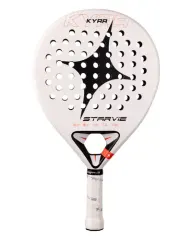
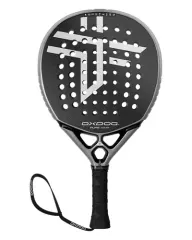
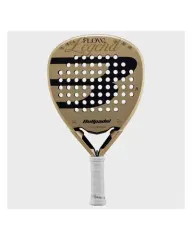
Style matters too. If you like to defend from the back and build the point, favour control rackets. If you love to finish at the net with the smash, look at power rackets. Here are the current number-one picks from three of our level lists:
How much does a padel racket cost?
Across the 313 rackets with a recorded price, the range is about £42 to £417 with a median of £159 (other currencies converted on 20 October 2026).
| Price band | Rackets | What you typically get |
|---|---|---|
| Up to £100 | 66 | Fibreglass faces, soft cores, round shapes: ideal first rackets. Best under £100 · best cheap |
| £101–£150 | 79 | Better finish and materials, many intermediate models. |
| £151–£250 | 112 | The bulk of the market: carbon faces and most brands’ main lines. |
| Over £250 | 56 | Tour and signature models; stiff and demanding, aimed at strong players. |
A more expensive racket is not automatically a better racket for you. Top-end models are tuned for players who generate a lot of racket speed, and many club players will play better with a cheaper, softer, more forgiving racket. Last season's version of a model is often a bargain: the changes year to year are usually small. See the best 2026 rackets if you want the newest models.
Arm comfort and injuries
Padel puts repeated load through the wrist, elbow and shoulder. Many players with sore arms choose a lighter racket with a soft core, a round shape and a low balance, because those specs are associated with less vibration and an easier swing. That is a reasonable way to shortlist, but it is not medical advice and no racket is proven to prevent or treat tennis elbow. Technique, warming up and not over-playing matter more. If you have pain, see a doctor or physiotherapist. Our arm-friendly list ranks rackets on exactly those published specs.
Padel racket brands
We track 23 brands. These six get the most search interest; each brand page lists every model with its specs and price.
- Adidas padel rackets (44 models)
- Babolat padel rackets (18 models)
- Nox padel rackets (46 models)
- Head padel rackets (18 models)
- Bullpadel padel rackets (64 models)
- Wilson padel rackets (6 models)
How to use WhichPadel to choose
- Take the racket quiz or filter the full database by shape, level and price.
- Open two or three rackets and put them side by side in the compare tool.
- Check the shop price, then buy from a retailer with a good returns policy in case it does not feel right.
About our data: specifications are compiled from brand and retailer sources. Ratings are calculated from published specs, not tested on court. Some links may be affiliate links; see our disclosure.
Padel racket FAQ
What padel racket should a beginner buy?
A round racket with a soft core and a low or medium balance. In our database round rackets average 74/100 for forgiveness against 29/100 for diamonds, and their median recorded price is about £104. See our beginners list for ranked picks.
How much should I spend on a padel racket?
Across the 313 rackets we track, recorded prices run from about £42 to £417, with a median of £159. 66 cost £100 or less. Beginners rarely benefit from tour-level rackets, which are usually stiffer and less forgiving.
What is the difference between round, teardrop and diamond padel rackets?
The shape moves the sweet spot. Round heads keep it low and central (control, forgiveness), diamonds move it towards the tip (power, less forgiving), and teardrop sits in between.
How heavy should a padel racket be?
Published weights in our database run from 280 g to 380 g, and most adult rackets sit around 355–375 g. Lighter rackets are easier to swing and kinder to the arm; heavier ones add stability and power.
Are carbon padel rackets better than fibreglass?
Not better, different. Carbon faces are stiffer, giving more control and power for players with a fast swing. Fibreglass faces are more flexible, give more ball output at slower swing speeds and usually feel softer and cost less.
Is a soft or hard core better?
Soft cores give easier ball output and a more comfortable feel; hard cores give more control and power at high swing speeds. On our spec model, soft-core rackets average 70/100 for comfort versus 23/100 for hard cores.
Which padel racket is best for tennis elbow?
No racket prevents or cures injury, and if you have pain you should see a doctor or physiotherapist. Players with sore arms often choose a lighter, round, soft-core racket, which is what our arm-friendly list ranks on.
How long does a padel racket last?
It depends on how often you play and how you treat it. Foam cores slowly lose their liveliness with use, and frames can crack after hard hits against the wall or floor. Regular club players often replace a racket every one to two seasons.
Can I use a tennis racket for padel?
No. Padel rackets are solid, stringless and perforated, and the rules require a padel racket. Tennis players moving to padel should look for a forgiving, easy-to-move racket while they learn shorter strokes.
Are the ratings on WhichPadel from lab tests?
No. Every rating is calculated from published specifications (shape, weight, balance, core and face) using our rating formula. They are a consistent way to compare rackets, not on-court tests.
Weight on the box isn’t the whole story: try our real-weight tool to see how heavy a racket will feel in the head. New to padel? Read the padel rules (serve, walls and scoring) and how to hold a padel racket.